Of all the things I have talked
about or tried to emulate in my life there is nothing more important outside of
living free in kindness toward one another than to know forgiveness.
Of all the challenges we face
in our humanity, perhaps knowing forgiveness is the most difficult trait to
embrace. But it very well may be the one
that provides us with the deepest connections of all. Unquestionably, it takes a great deal of
courage and self-assurance to forgive another person. And surely it may not be
easy, especially when we consider the concept of forgiving someone knowing
there is a high possibility that the person or group we are trying to forgive
will do the same thing to cause you hurt, loss, or suffering once again.
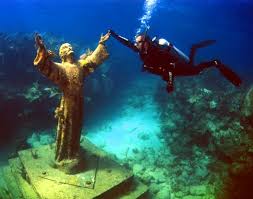
In my faith, I am reminded of what exactly Jesus Christ
did on that cross: He acted and gave of his life so that our sins may be
forgiven.
Forgiveness. It is a key element that allows you to live in Uhuru - to live in freedom by being unbowed to your morals, ethics, and values.
In my life, I know I have made my fair share of mistakes,
just like each of us except one. In part my own life has evolved to
understanding the concept of forgiveness because I have needed to be forgiven. I still do. I make mistakes.
In the philanthropic work I try to put forth helping
families in crisis, I often find myself overloaded with multiple cases of
international child abduction and trafficking where real lives are at stake.
This world is dark, unfair, filled with malice and injustice, and removed of
light. And I travel there often. It is
not easy. And at times, knowing the risks and exploitation of children that
occurs, I know there are times when my disbelief of the circumstances children
and targeted parents face has led me at times to close my heart from the
concept of forgiveness. Thank goodness,
I am reminded of the idea of forgiveness each and every day by Christ, who is
in my life, along with my loving memories of my remarkable grandfather, Rabbi
Morton Kohn, who truly reinforced Christ’s teachings of forgiveness to me by
living a life of forgiveness.
 So today is Good Friday. And I celebrate Forgiveness. For anyone I
have ever hurt I am sorry if my actions or lack of them may have caused you
hurt. And to anyone who may have caused
me hurt, I forgive you and wish you happiness.
So today is Good Friday. And I celebrate Forgiveness. For anyone I
have ever hurt I am sorry if my actions or lack of them may have caused you
hurt. And to anyone who may have caused
me hurt, I forgive you and wish you happiness.
One other thing: it is okay to forgive yourself. You are not perfect. You are not expected to be. You, like me, and the neighbor next to you, will make many, many mistakes. Forgive yourself. Christ did.
In the spirit of forgiveness I thought I would share a
little history taken from Wikipedia about Forgiveness.
And to each of you who happen to be celebrating this Holy Week of Passover and Easter, I wish each of you the wonderment of giving and receiving forgiveness.
And if there is one special prayer that I have been holding in my heart that I would like to share with you, it is that all parents in conflict with one another truly attempt to find common ground necessary in the best interest of their child.
Forgiveness
Based on the
details of the Canonical gospels, the Crucifixion of Jesus was
most likely to have been on a Friday (John
19:42) ] The estimated
year of the Crucifixion is AD 33, by two different groups, and originally as AD
34 by Isaac
Newton via the differences between the Biblical and Julian
calendars and the crescent of the moon.
A third method, using a
completely different astronomical approach based on a lunar Crucifixion darkness and eclipse
model (consistent with Apostle Peter's reference to a "moon of
blood" in Acts 2:20), points to Friday, 3 April AD 33.
 Forgiveness is the renunciation or cessation of resentment,
indignation
or anger as a
result of a perceived offence, disagreement, or mistake, or ceasing to demand. punishment
or restitution.
The Oxford English Dictionary defines
forgiveness as 'to grant free pardon and to give up all claim on account of an
offence or debt'. The concept and benefits of forgiveness have been explored in
religious
thought, the social sciences and medicine.
Forgiveness may be considered simply in terms of the person who forgives
including forgiving themselves, in terms of the person forgiven or in terms of
the relationship between the forgiver and the person forgiven. In most
contexts, forgiveness is granted without any expectation of restorative justice, and without any response
on the part of the offender (for example, one may forgive a person who is incommunicado
or dead). In practical terms, it may be necessary for the offender to offer
some form of acknowledgment, an apology, or even just ask for forgiveness, in order
for the wronged person to believe himself able to forgive.
Forgiveness is the renunciation or cessation of resentment,
indignation
or anger as a
result of a perceived offence, disagreement, or mistake, or ceasing to demand. punishment
or restitution.
The Oxford English Dictionary defines
forgiveness as 'to grant free pardon and to give up all claim on account of an
offence or debt'. The concept and benefits of forgiveness have been explored in
religious
thought, the social sciences and medicine.
Forgiveness may be considered simply in terms of the person who forgives
including forgiving themselves, in terms of the person forgiven or in terms of
the relationship between the forgiver and the person forgiven. In most
contexts, forgiveness is granted without any expectation of restorative justice, and without any response
on the part of the offender (for example, one may forgive a person who is incommunicado
or dead). In practical terms, it may be necessary for the offender to offer
some form of acknowledgment, an apology, or even just ask for forgiveness, in order
for the wronged person to believe himself able to forgive.
Most world religions include teachings on the nature of
forgiveness, and many of these teachings provide an underlying basis for many
varying modern day traditions and practices of forgiveness. Some religious
doctrines or philosophies place greater emphasis on the need for humans to find
some sort of divine forgiveness for their own shortcomings, others place
greater emphasis on the need for humans to practice forgiveness of one another,
yet others make little or no distinction between human and divine forgiveness.
Research
Although there is presently no consensus for a
psychological definition of forgiveness in the research literature, agreement
has emerged that forgiveness is a process and a number of models describing the
process of forgiveness have been published, including one from a radical
behavioral perspective.
Dr. Robert Enright from the University of Wisconsin–Madison
founded the International Forgiveness Institute and is considered the initiator
of forgiveness studies. He developed a 20-Step Process Model of Forgiveness.
Recent work has focused on what kind of person is more likely to be forgiving.
A longitudinal study showed that people who were generally more neurotic,
angry and hostile in life were less likely to forgive another person even after
a long time had passed. Specifically, these people were more likely to still
avoid their transgressor and want to enact revenge upon them two and a half
years after the transgression.
Studies show that people who forgive are happier and
healthier than those who hold resentments. The first study to look at how
forgiveness improves physical health discovered that when people think about
forgiving an offender it leads to improved functioning in their cardiovascular
and nervous systems. Another study at the University of Wisconsin found the
more forgiving people were, the less they suffered from a wide range of
illnesses. The less forgiving people reported a greater number of health
problems.
The research of Dr. Fred Luskin of Stanford University shows that forgiveness can
be learned. Dr. Frederic Luskin's work is based on seven major research
projects into the effects of forgiveness, giving empirical validity to the
concept that forgiveness is not only powerful, but also excellent for your
health. Dr. Fred Luskin author of the book "Learning to forgive was
presented with a Champion of Forgiveness award by the Forgiveness Alliance for
his groundbreaking work with forgiveness, reconciliation and peace.
In three separate studies, including one with Catholics
and Protestants from Northern Ireland whose family members were murdered in the
political violence, he found that people who are taught how to forgive become
less angry, feel less hurt, are more optimistic, become more forgiving in a
variety of situations, and become more compassionate and self-confident. His
studies show a reduction in experience of stress, physical manifestations of
stress, and an increase in vitality.
Religious views
Judaism
In Judaism, if a person causes harm, but then sincerely and
honestly apologizes to the wronged individual and tries to rectify the wrong,
the wronged individual is religiously required to grant forgiveness:
- "It
is forbidden to be obdurate and not allow yourself to be appeased. On the
contrary, one should be easily pacified and find it difficult to become
angry. When asked by an offender for forgiveness, one should forgive with
a sincere mind and a willing spirit. . . forgiveness is natural to the
seed of Israel." (Mishneh Torah, Teshuvah
2:10)
In Judaism, one must go to those he has harmed in
order to be entitled to forgiveness.
[One who sincerely apologizes three times for a wrong committed against another
has fulfilled his or her obligation to seek forgiveness. (Shulchan
Aruch) OC 606:1] This means that in Judaism a person cannot obtain
forgiveness from God for wrongs the person has done to other people. This also
means that, unless the victim forgave the perpetrator before he died, murder is
unforgivable in Judaism,
and they will answer to God
for it, though the victims' family and friends can forgive the murderer for the
grief they caused
them. The Tefila Zaka meditation, which is recited just before Yom Kippur,
closes with the following:
- "I
know that there is no one so righteous that they have not wronged another,
financially or physically, through deed or speech. This pains my heart
within me, because wrongs between humans and their fellow are not atoned
by Yom Kippur, until the wronged one is appeased. Because of this, my
heart breaks within me, and my bones tremble; for even the day of death
does not atone for such sins. Therefore I prostrate and beg before You, to
have mercy on me, and grant me grace, compassion, and mercy in Your eyes
and in the eyes of all people. For behold, I forgive with a final and
resolved forgiveness anyone who has wronged me, whether in person or
property, even if they slandered me, or spread falsehoods against me. So I
release anyone who has injured me either in person or in property, or has
committed any manner of sin that one may commit against another [except
for legally enforceable business obligations, and except for someone who
has deliberately harmed me with the thought ‘I can harm him because he
will forgive me']. Except for these two, I fully and finally forgive
everyone; may no one be punished because of me. And just as I forgive
everyone, so may You grant me grace in the eyes of others, that they
too forgive me absolutely."
Thus the "reward" for forgiving others is not
God's forgiveness for wrongs done to others, but rather help in obtaining
forgiveness from the other person.
Sir Jonathan Sacks, Chief Rabbi of the United Hebrew
Congregations of the Commonwealth, summarized: "it is not that God
forgives, while human beings do not. To the contrary, we believe that just as
only God can forgive sins against God, so only human beings can forgive sins
against human beings."
Jews observe a Day of Atonement Yom Kippur
on the day before God makes decisions regarding what will happen during the
coming year. Just prior to Yom Kippur, Jews will ask forgiveness of those they
have wronged during the prior year (if they have not already done so). During
Yom Kippur itself, Jews fast and pray for God's forgiveness for the
transgressions they have made against God in the prior year. Sincere repentance
is required, and once again, God can only forgive one for the sins one has
committed against God; this is why it is necessary for Jews also to seek the
forgiveness of those people who they have wronged.
Christianity
In the New Testament, Jesus speaks of the importance of
Christians forgiving or showing mercy towards others. The Parable of the Prodigal Son is
perhaps the best known instance of such teaching and practice of forgiveness.
In the Sermon on the Mount, Jesus repeatedly spoke of
forgiveness, “Blessed are the merciful, for they will be shown mercy.” Matthew
5:7 (NIV) “Therefore, if you are offering your gift at the altar and there
remember that your brother has something against you, leave your gift there in
front of the altar. First go and be reconciled to your brother; then come and
offer your gift.” Matthew 5:23-24 (NIV) “And when you stand praying, if you
hold anything against anyone, forgive him, so that your Father in heaven may
forgive you your sins.” Mark 11:25 (NIV) “But I tell you who hear me: Love your
enemies, do good to those who hate you, bless those who curse you, pray for
those who mistreat you. If someone strikes you on one cheek, turn to him the
other also.” Luke 6:27-29 (NIV) “Be merciful, just as your Father is merciful.”
Luke 6:36 (NIV) “Do not judge, and you will not be judged. Do not condemn, and
you will not be condemned. Forgive, and you will be forgiven.” Luke 6:37 (NIV)
Elsewhere, it is said, "Then Peter came to Him and
said, “Lord, how often shall my brother sin against me, and I forgive him? Up
to seven times?” Jesus said to him, “I do not say to you, up to seven times,
but up to seventy times seven. Matthew 18:21-22 (NKJV)
Jesus asked for God's forgiveness of those who crucified
him. "And Jesus said, 'Father, forgive them, for they know not what they
do.'" Luke 23: 34 (ESV)
Benedict XVI, on a visit to Lebanon in 2012, insisted
that peace must be based on mutual forgiveness: "Only forgiveness, given
and received, can lay lasting foundations for reconciliation and universal
peace"
Islam
Islam
teaches that God is Al-Ghaffur
"The All-Forgiving", and is the original source of all forgiveness (ghufran
غفران). Forgiveness often requires the repentance
of those being forgiven. Depending on the type of wrong committed, forgiveness
can come either directly from Allah, or from one's fellow man who received the
wrong. In the case of divine forgiveness, the asking for divine forgiveness via
repentance is important. In the case of human forgiveness, it is important to
both forgive, and to be forgiven.
Islam does not teach universalism,
however, and the Qur'an states explicitly that God will not forgive idol
worship (shirk):
God does not
forgive idol worship (if maintained until death), and He forgives lesser
offenses for whomever He wills. Anyone who idolizes any idol beside God has
strayed far astray. (Qur'an 4:116)
The Qur'an never allows for violent behavior on the part
of Muslim believers, except in the cases of defending one's religion, one's
life, or one's property. Outside of this, the Qu'ran makes no allowances for
violent behavior. From time to time certain Muslims have interpreted such
Qur'anic allowances for "defensive violence" to include what other
Muslims have viewed more as unwarranted and overly aggressive violence. This
interpretative debate about when to forgive and when to aggressively attack or
defend continues to this day within the Muslim community.
The Qur'an makes it clear that, whenever possible, it is
better to forgive another than to attack another. The Qur'an describes the
believers (Muslims)
as those who, avoid gross sins and vice, and when angered they forgive.
(Qur'an 42:37) and says that Although the just requital for an injustice is
an equivalent retribution, those who pardon and maintain righteousness are
rewarded by GOD. He does not love the unjust. (Qur'an 42:40).
To receive forgiveness from God there are three
requirements:
- Recognizing
the offense itself and its admission before God.
- Making a
commitment not to repeat the offense.
- Asking for
forgiveness from God.
If the offense was committed against another human being,
or against society, a fourth condition is added:
- Recognizing
the offense before those against whom offense was committed and before
God.
- Committing
oneself not to repeat the offense.
- Doing
whatever needs to be done to rectify the offense (within reason) and
asking pardon of the offended party.
- Asking God
for forgiveness.
There are no particular words to say for asking
forgiveness. However, Muslims are taught many phrases and words to keep
repeating daily asking God's forgiveness. For example:
- Astaghfiru-Allah, "I
ask forgiveness from Allah"
- Subhanaka-Allah
humma wa bi hamdika wa ash-hadu al la Ilaha illa Anta astaghfiruka wa
atubu ilayk, "Glory be to You, Allah, and with You Praise
(thanks) and I bear witness that there is no deity but You, I ask Your
forgiveness and I return to You (in obedience)".
Islamic teaching presents the Prophet Muhammad as an
example of someone who would forgive others for their ignorance, even those who
might have once considered themselves to be his enemies. One example of
Muhammad's practice of forgiveness can be found in the Hadith, the body of
early Islamic literature about the life of Muhammad. This account is as
follows:
The Prophet was the most forgiving person. He was ever ready to forgive his
enemies. When he went to Ta’if to preach the message of Allah, its people
mistreated him, abused him and hit him with stones. He left the city humiliated
and wounded. When he took shelter under a tree, the angel of Allah visited him
and told him that Allah sent him to destroy the people of Ta’if because of
their sin of maltreating their Prophet. Muhammad prayed to Allah to save the people
of Ta'if, because what they did was out of their ignorance.
Bahá'í Faith
In the Bahá'í Writings, this explanation is given of how
to be forgiving towards others:
"Love the creatures for the sake of God and not for
themselves. You will never become angry or impatient if you love them for the
sake of God. Humanity is not perfect. There are imperfections in every human
being, and you will always become unhappy if you look toward the people
themselves. But if you look toward God, you will love them and be kind to them,
for the world of God is the world of perfection and complete mercy. Therefore,
do not look at the shortcomings of anybody; see with the sight of
forgiveness."
— `Abdu'l-Bahá, The Promulgation of Universal Peace,
p. 92
Buddhism
In Buddhism, forgiveness is seen as a practice to prevent
harmful thoughts from causing havoc on one’s mental well-being. Buddhism
recognizes that feelings of hatred and ill-will leave a lasting effect on our
mind karma.
Instead, Buddhism encourages the cultivation of thoughts that leave a wholesome
effect. "In contemplating the law of karma, we realize that it is not a
matter of seeking revenge but of practicing mettā and
forgiveness, for the victimizer is, truly, the most unfortunate of all. When
resentments have already arisen, the Buddhist view is to calmly proceed to
release them by going back to their roots. Buddhism centers on release from
delusion and suffering through meditation and receiving insight into the nature
of reality. Buddhism questions the reality of the passions that make
forgiveness necessary as well as the reality of the objects of those passions
"If we haven’t forgiven, we keep creating an identity around our pain, and
that is what is reborn. That is what suffers.
Buddhism places much emphasis on the concepts of Mettā
(loving kindness), karuna (compassion), mudita
(sympathetic joy), and upekkhā (equanimity), as a means to avoiding resentments
in the first place. These reflections are used to understand the context of
suffering in the world, both our own and the suffering of others.
“He abused me,
he struck me, he overcame me, he robbed me’ — in those who harbor such thoughts
hatred will never cease.”
“He abused me,
he struck me, he overcame me, he robbed me’ — in those who do not harbor such
thoughts hatred will cease.”
Hinduism
The concept of performing atonement from one's wrongdoing
(Prayaschittha — Sanskrit: Penance), and asking for forgiveness is very much a
part of the practice of Hinduism. Prayaschittha is related to the law of Karma. Karma is a sum
of all that an individual has done, is currently doing and will do. The effects
of those deeds and these deeds actively create present and future experiences,
thus making one responsible for one's own life, and the pain in others.
Addressing Dhritarashtra, Vidura said: "There is one
only defect in forgiving persons, and not another; that defect is that people
take a forgiving person to be weak. That defect, however, should not be taken
into consideration, for forgiveness is a great power. Forgiveness is a virtue
of the weak, and an ornament of the strong. Forgiveness subdues (all) in this
world; what is there that forgiveness cannot achieve? What can a wicked person
do unto him who carries the sabre of forgiveness in his hand? Fire falling on
the grassless ground is extinguished of itself. And unforgiving individual
defiles himself with many enormities. Righteousness is the one highest good;
and forgiveness is the one supreme peace; knowledge is one supreme contentment;
and benevolence, one sole happiness." (From the Mahabharata, Udyoga Parva
Section XXXIII, Translated by Sri Kisari Mohan Ganguli).
An even more authoritative statement about forgiveness is
espoused by Krishna,
who is considered to be an incarnation (Avatar) of Vishnu by Hindus.
Krishna said in the Gita
that forgiveness is one of the characteristics of one born for a divine state.
It is noteworthy that he distinguishes those good traits from those he
considered to be demoniac, such as pride, self-conceit and anger (Bhagavad
Gita, Chapter 16, verse 3).
Village priests may open their temple ceremonies with the
following beloved invocation:
O Lord, forgive three sins that are due to my human
limitations:
Thou art everywhere, but I worship thee here;
Thou art without form, but I worship thee in these forms;
Thou needest no praise, yet I offer thee these prayers and salutations;
Lord, forgive three sins that are due to my human limitations.
Jainism
In Jainism, forgiveness is one of the main virtues that needs to
be cultivated by the Jains. Kṣamāpanā or supreme forgiveness forms part
of one of the ten characteristics of dharma.[24] In
the Jain prayer, (pratikramana) Jains repeatedly seek forgiveness from
various creatures—even from ekindriyas or single sensed beings like
plants and microorganisms that they may have harmed while eating and doing
routine activities.[25]
Forgiveness is asked by uttering the phrase, Micchāmi dukkaḍaṃ. Micchāmi
dukkaḍaṃ is a Prakrit language phrase literally meaning
"may all the evil that has been done be fruitless."[26]
During samvatsari—the
last day of Jain festival paryusana—Jains utter the phrase Micchami Dukkadam
after pratikraman.
As a matter of ritual, they personally greet their friends and relatives micchāmi
dukkaḍaṃ seeking their forgiveness. No private quarrel or dispute may be
carried beyond samvatsari, and letters and telephone calls are made to the
outstation friends and relatives asking their forgiveness.
Khāmemi savva-jīve savvë jive khamantu me /
metti me savva-bhūesu, veraṃ mejjha na keṇavi //
(I ask pardon of all creatures, may all creatures pardon
me.
May I have friendship with all beings and enmity with
none.)
In their daily prayers and samayika, Jains
recite Iryavahi sutra seeking forgiveness from all creatures while
involved in routine activities:
May you, O Revered One! Voluntarily permit me. I would
like to confess my sinful acts committed while walking. I honour your
permission. I desire to absolve myself of the sinful acts by confessing them. I
seek forgiveness from all those living beings which I may have tortured while
walking, coming and going, treading on living organism, seeds, green grass, dew
drops, ant hills, moss, live water, live earth, spider web and others. I seek
forgiveness from all these living beings, be they — one sensed, two sensed,
three sensed, four sensed or five sensed. Which I may have kicked, covered with
dust, rubbed with ground, collided with other, turned upside down, tormented,
frightened, shifted from one place to another or killed and deprived them of
their lives. (By confessing) may I be absolved of all these sins.
Jain texts quote Māhavīra on
forgiveness:
By practicing prāyaṣcitta (repentance), a soul
gets rid of sins, and commits no transgressions; he who correctly practises prāyaṣcitta
gains the road and the reward of the road, he wins the reward of good conduct.
By begging forgiveness he obtains happiness of mind; thereby he acquires a kind
disposition towards all kinds of living beings; by this kind disposition he
obtains purity of character and freedom from fear.
— Māhavīra in Uttarādhyayana Sūtra 29:17–18
Even the code of conduct amongst the monks requires the
monks to ask forgiveness for all transgressions:
If among monks or nuns occurs a quarrel or dispute or
dissension, the young monk should ask forgiveness of the superior, and the
superior of the young monk. They should forgive and ask forgiveness, appease
and be appeased, and converse without restraint. For him who is appeased, there
will be success (in control); for him who is not appeased, there will be no
success; therefore one should appease one's self. 'Why has this been said, Sir?
Peace is the essence of monasticism'.
— Kalpa Sūtra 8:59
Hoʻoponopono
Hoʻoponopono is an ancient Hawaiian practice of
reconciliation and forgiveness, combined with prayer. Similar forgiveness
practices were performed on islands throughout the South Pacific,
including Samoa, Tahiti and New Zealand.
Traditionally Hoʻoponopono is practiced by healing priests or kahuna lapaʻau
among family members of a person who is physically ill. Modern versions are
performed within the family by a family elder, or by the individual alone.
Popular recognition
The need to forgive is widely recognized by the public,
but they are often at a loss for ways to accomplish it. For example, in a large
representative sampling of American people on various religious topics in 1988,
the Gallup Organization found that 94% said
it was important to forgive, but 85% said they needed some outside help to be
able to forgive. However, not even regular prayer was found to be effective.
Akin to forgiveness is mercy, so even if a person is not able to complete the
forgiveness process he or she can still show mercy, especially when so many
wrongs are done out of weakness rather than malice. The Gallup poll revealed
that the only thing that was effective was "meditative
prayer".